Innovation, sustainability, and skilled labor: the energy transition as a strategic driver for the future of Southern Italy
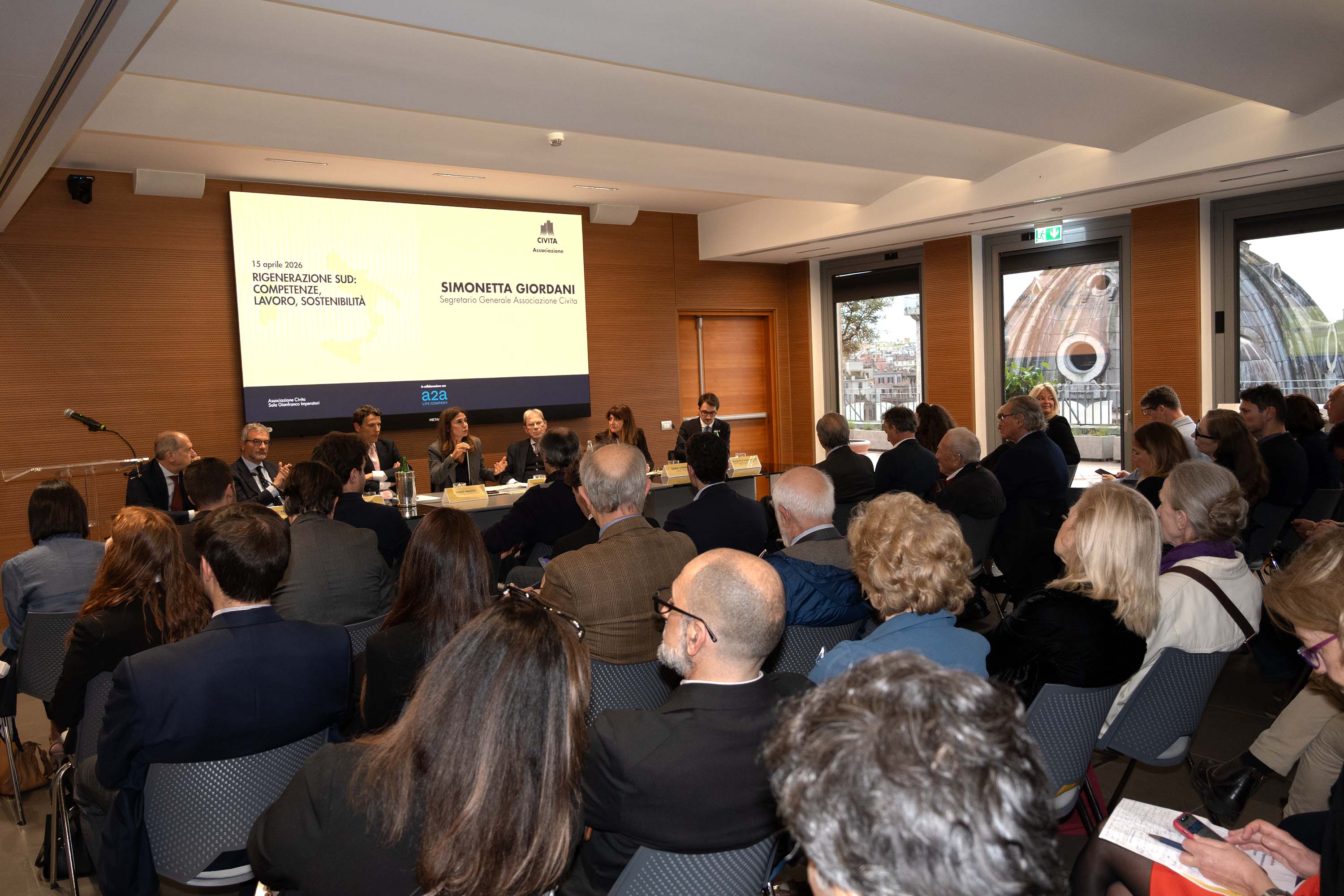
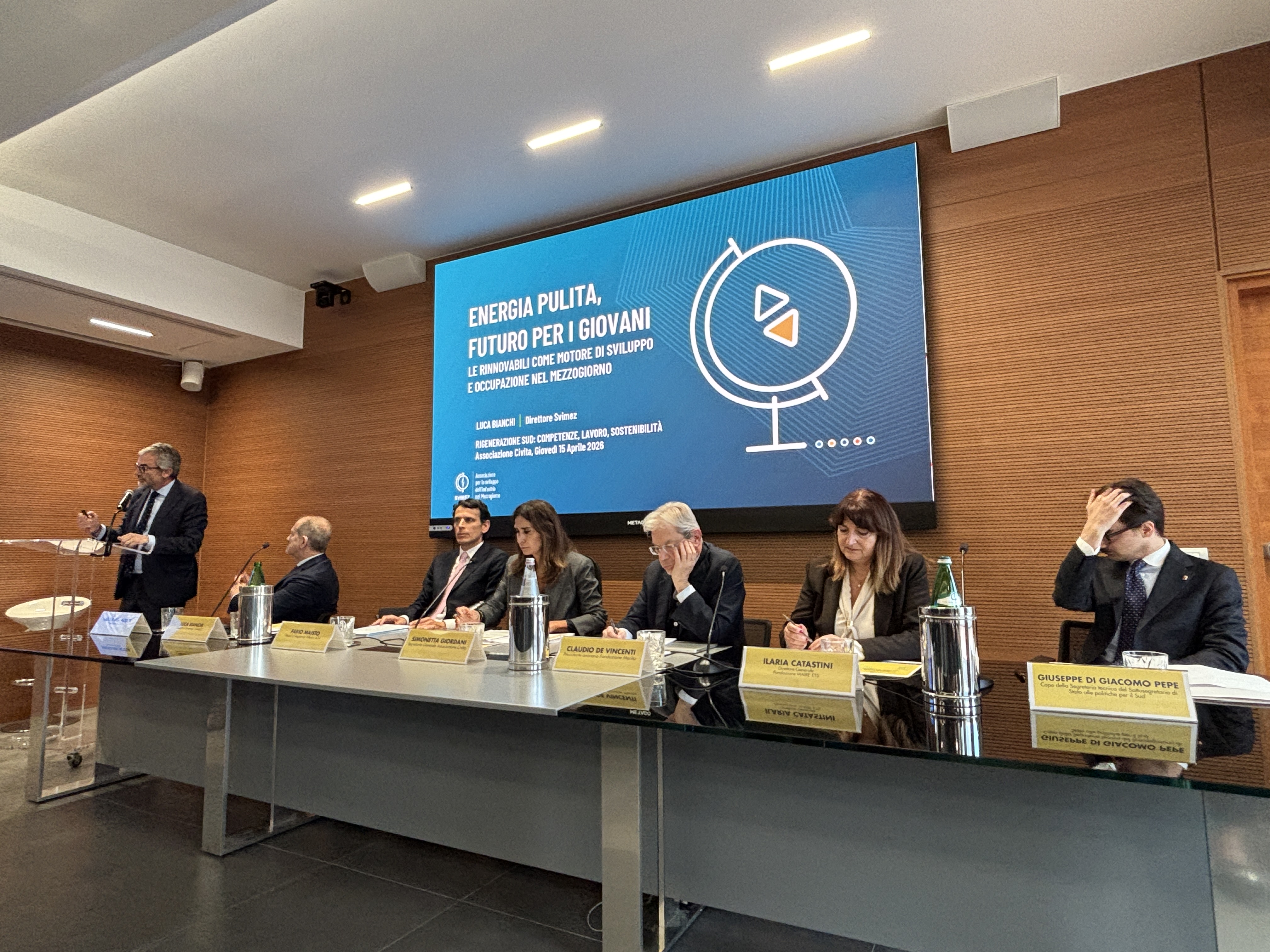
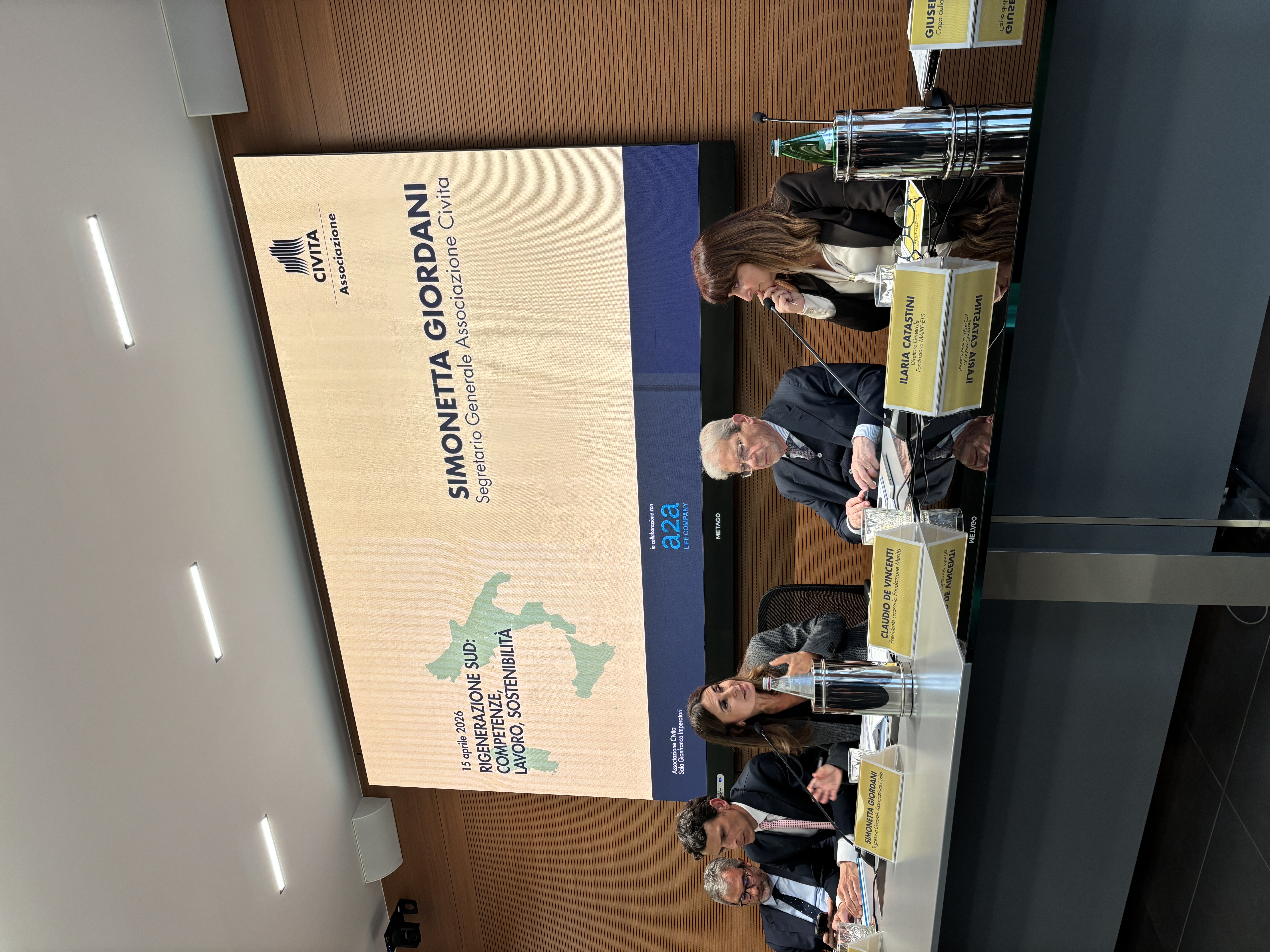
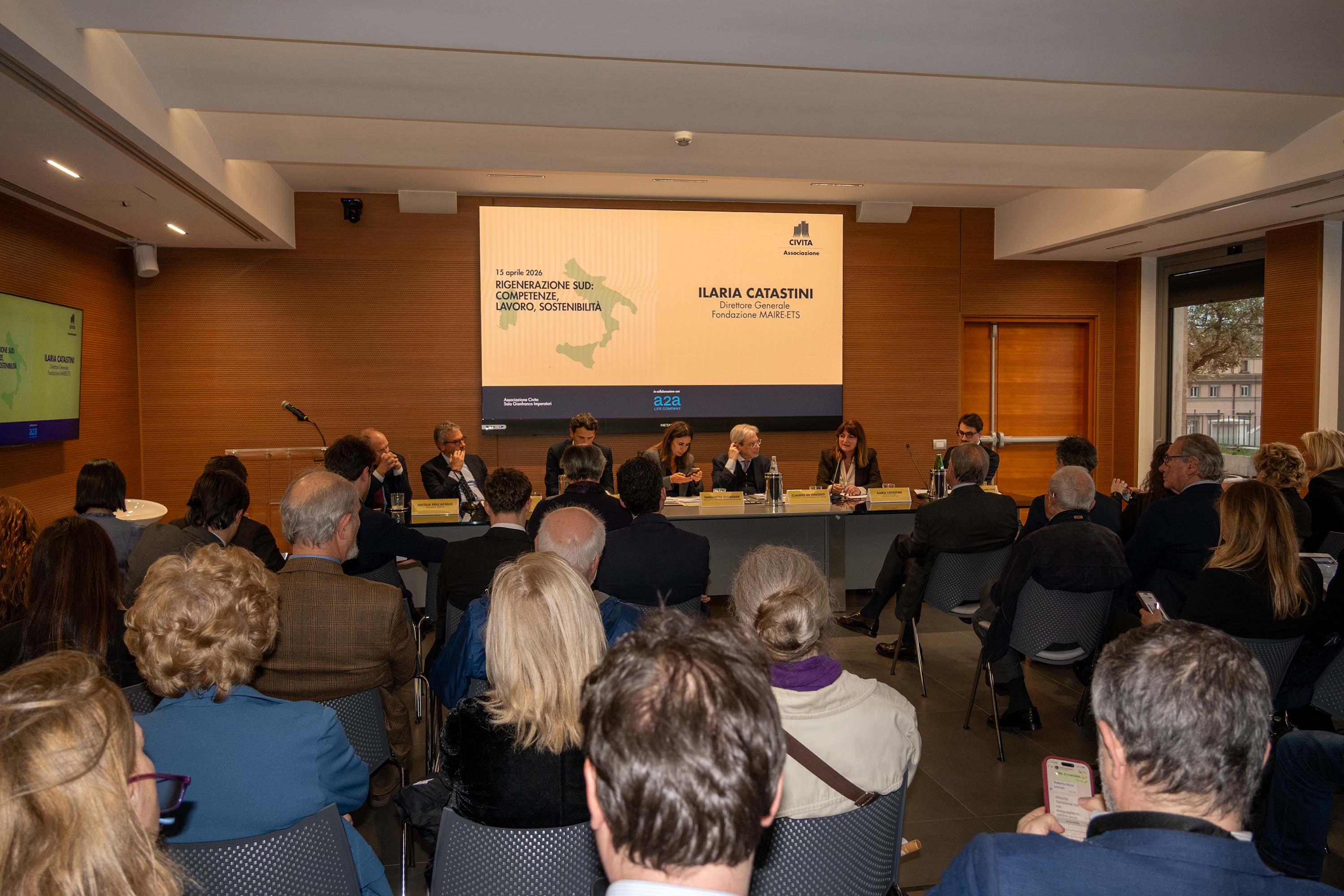
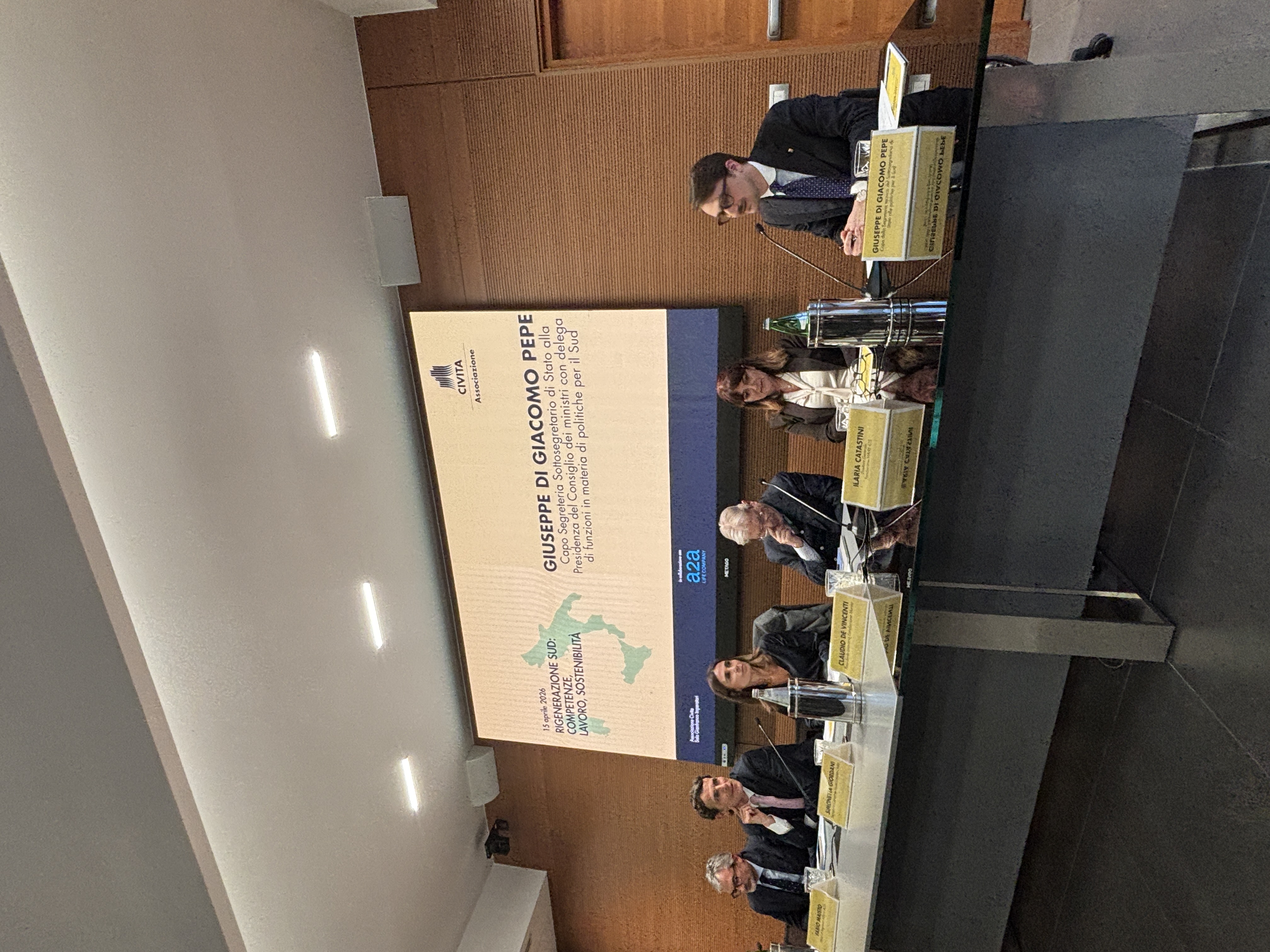
NEWSOn April 15, 2026, the event “Rigenerazione Sud: competenze, lavoro, sostenibilità. Le rinnovabili per il futuro del Mezzogiorno” (“Southern Regeneration: Skills, Employment, Sustainability. Renewables for the Future of Southern Italy”) was held by the Associazione Civita in collaboration with A2A at the Associazione Civita headquarters in Piazza Venezia, Rome.
The conference served as an opportunity for dialogue among institutions, the business community, and social organizations, fostering a shared reflection on the opportunities that the energy transition represents, particularly in terms of employment, with a specific focus on Southern Italy.
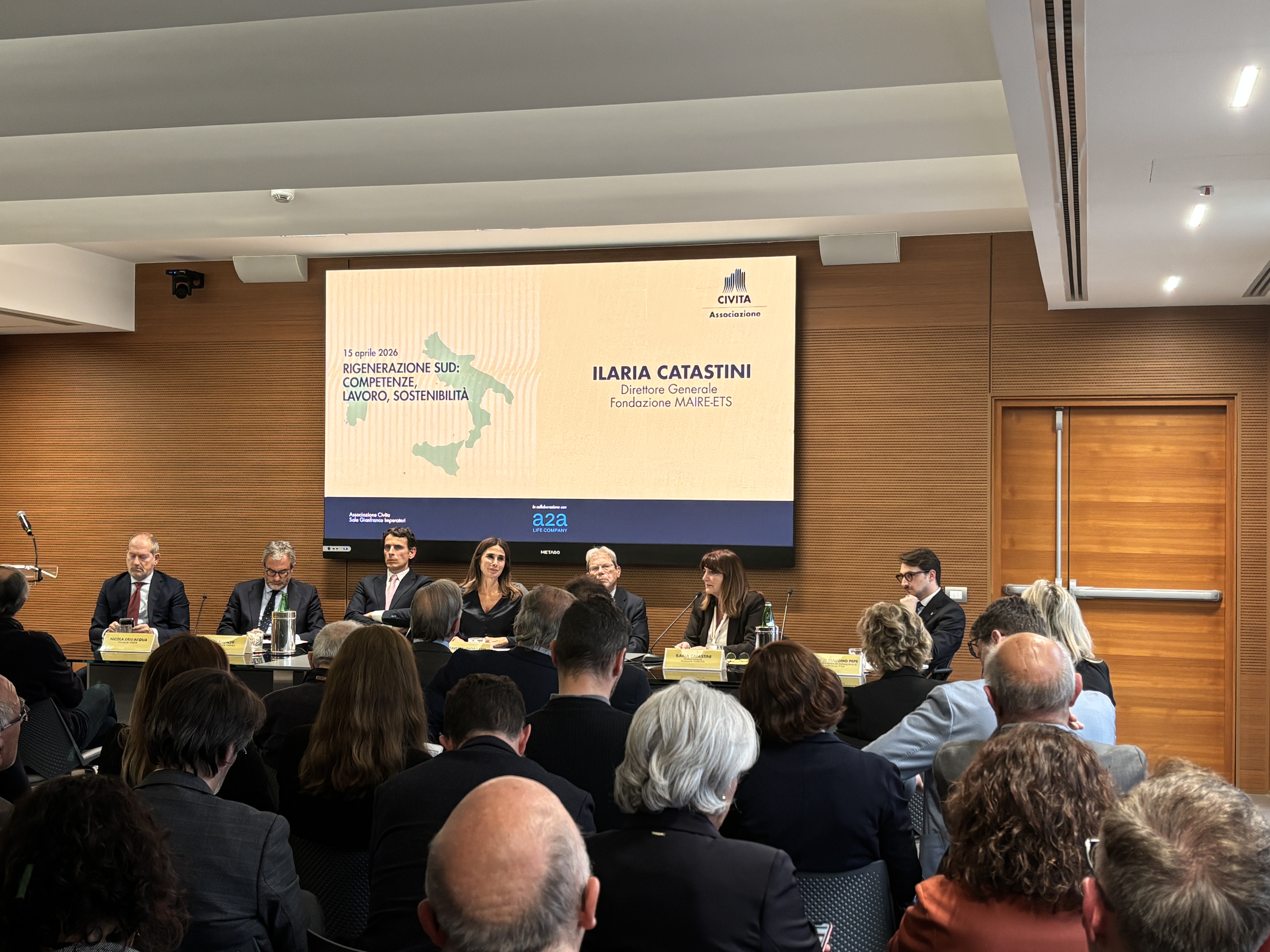
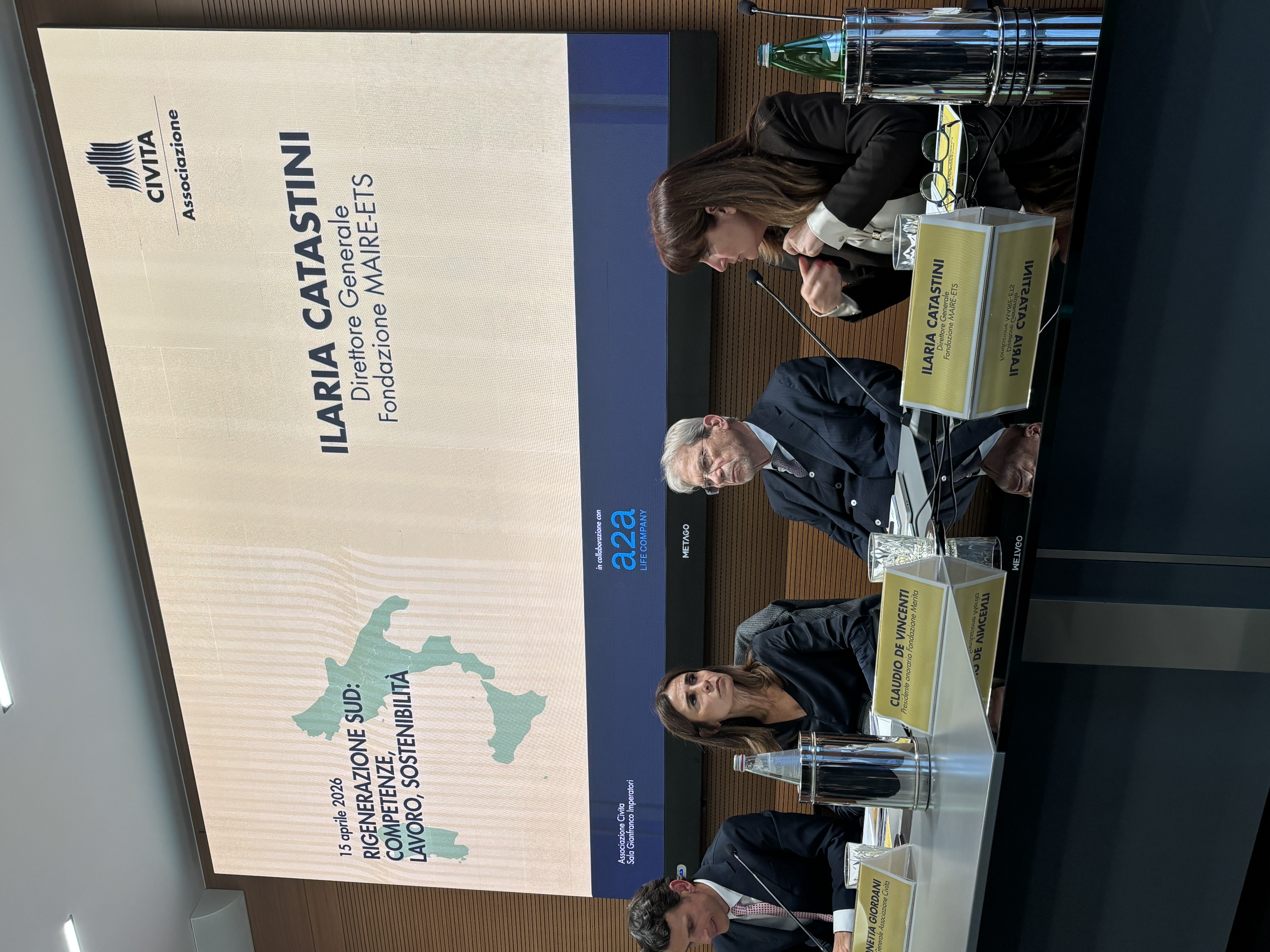
Following opening remarks by Simonetta Giordani, Secretary General of the Civita Association and guest speaker, the following speakers took the floor: Luca Bianchi, General Manager of SVIMEZ, Ilaria Catastini, General Director of the Fondazione MAIRE - ETS; Nicola Dell’Acqua, President of ARERA; Claudio De Vincenti, Honorary President of the Merita Foundation; Renato Mazzoncini, CEO of A2A; and Fabio Maisto, Head of Regional Affairs at A2A. The institutional closing remarks were delivered by Giuseppe Di Giacomo Pepe, Head of the Technical Secretariat to the Undersecretary of State to the Presidency of the Council of Ministers with responsibility for policies concerning Southern Italy.
The debate stemmed from the findings outlined in the research report commissioned by SVIMEZ on employment trends in Southern Italy. While the skills shortage in the energy transition sector is now well-known, the NEET figures are particularly striking, especially in regions such as Campania and Calabria. However, the report also presents encouraging data, showing an increase in employment—particularly among young people—precisely in Southern Italy. While these figures are strongly linked to “traditional” sectors (such as tourism and construction), there is an equally strong perception—even in Southern Italy—of the positive ripple effects on employment that the energy transition can drive, generating demand for new skills and, consequently, new professional roles and training pathways. The energy transition indeed represents a profound transformation that permeates models of design, production, and employment.
Companies need to take action and make investments on the local level. It is within this context that our General Director, Ilaria Catastini—who also serves as Head of Sustainability at MAIRE Group—stepped in, bringing two key points to the discussion. On the one hand, the example of the Group, which chose to open a new center of excellence in Catania for the development of decarbonization technologies; on the other, an analysis of the global scenario regarding the perception and urgency of developing skills for the implementation of the energy transition—an effort we, as a Foundation, are advancing through the “Climate Goals” series.
Opportunity means helping the younger generations discover the vast world underlying “engineering” and training related to the entire energy sector, but also valuing and reskilling expertise from sectors that are gradually falling into disuse.
In this spirit, the meeting concluded by emphasizing how the convergence of the cultural, industrial, and institutional worlds can bring about and leverage the competitive advantage that can be built precisely on these skills.