What the literature tells us about the theme: text mining e topic modeling
RESEARCHReport TRAJECTORIES
Research n. 01 - What the literature tells us about the theme: text mining e topic modeling
Doc. Cecilia Fortunato
Abstract and scope of the research
This exploratory study aims to map the current state of scientific literature investigating the link between economic migration and the energy transition. Using mixed techniques of quantitative and qualitative analysis of text-based data, the study provides an overview of a collection of 3,731 documents published between 1990 and 2025. The transition to renewable energy presents several opportunities, but it is embedded in a complex economic, demographic, and social context with a structural shortage of workers. The migration of foreign workers has long been a crucial element of the Italian and European production system, as well as a phenomenon that generates change and innovation. However, the analysis reveals the vulnerability of foreign workers, various obstacles to their economic and social inclusion (legal, linguistic, cultural, gender, and qualification recognition), and a lack of attention by institutions in the areas of guidance, training, and mediation between labor supply and demand. An emerging line of research addresses the growing internationalization of the workforce specializing in “green and digital” jobs. However, specific studies on the link between foreign workers and the energy transition are still insufficient, particularly in policies and documents related to the Green Deal.
Methodology
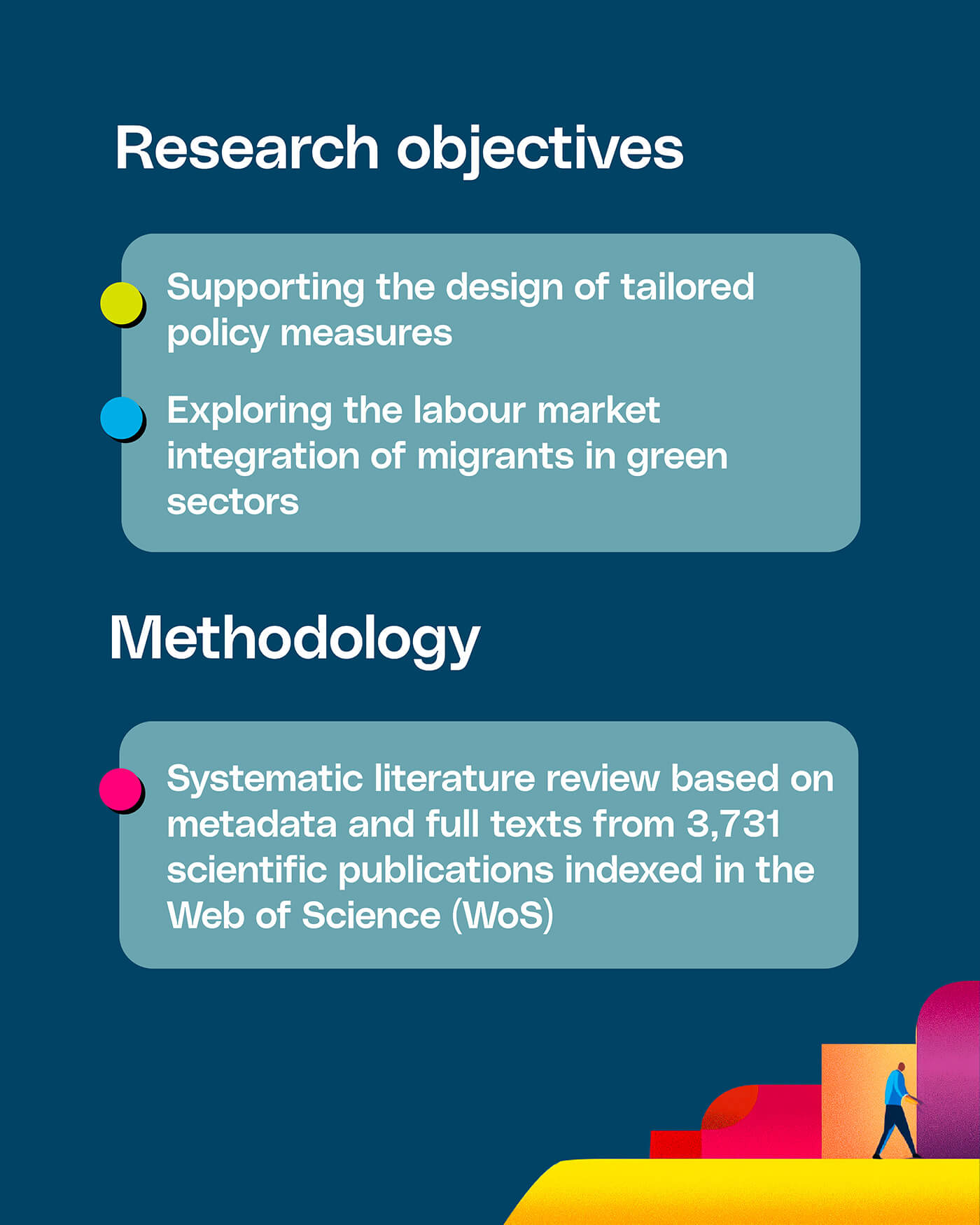
With the overproduction and digitization of research, there is an increasingly urgent need for tools to synthesize, guide, and disseminate scientific output. This study proposes a theoretical framework and a ‘mixed approach’, both quantitative and qualitative, for the analysis of scientific literature on the topics of economic migration and energy[1], transition, published between 1990 and 2025 and indexed on Web of Science (WoS)[2]. For the systematic review of publications, an iterative procedure of inclusion/exclusion was applied to a collection of documents, which were then subjected to bibliometric and thematic[3]analysis. The bibliometric analysis of the metadata associated with the publications reveals the geographical and temporal evolution of the research, the forms of funding, the most active authors and publishers, and the extension of the research networks. The systematic analysis of a body of texts, in this case the abstracts of the publications, requires an extensive preparation[4] process. Elements that do not add semantic value to the analysis (symbols, punctuation, stop words) are removed from the text; tokenization techniques, which divide a text into meaningful units (tokens), and lemmatization techniques, which reduce words to their basic form, are applied. Based on their frequency, tokens are sorted into a matrix[5] that assigns them a weighted value, taking into account that words that appear more frequently may be un-informative. Probabilistic models[6] identify the latent structures of the text and provide a summary of the main topics covered, highlighting areas of relevant research and emerging trends.
Concluding the study, a qualitative analysis of the content of a limited selection of publications is proposed, which explore the link between foreign workers and their inclusion in the green economy sectors.
Description of the research and main findings
Sustainability goals and strategies for pursuing them are among the most debated issues of our time. Europe, particularly the Mediterranean area, has multiple vulnerabilities in terms of environmental risk, many of which have been exacerbated by the recent acceleration of climate change. Extreme weather events, drought, and hydrogeological instability are just some of the emergencies that the international community and local governances are facing. In addition, the rise in global temperatures projected for the coming decades will exacerbate existing critical issues and increase the number of areas at risk[8]. The timely implementation of strategies to mitigate these processes is essential. European and global policies for an ecological transition of the economy[9] aim to mitigate the impact of climate change resulting from human activity. European economies are arduously pursuing projects of environmental, social, and economic sustainability, shifting from the intensive exploitation of fossil fuels to renewable energy sources (solar, wind, geothermal, hydroelectric, hydrogen, biomass). From an economic standpoint, these productive transformations and a green entrepreneurial orientation mechanism can promote the rational allocation of local resources, effectively increase opportunities, long-term success, and the economic and social resilience of the communities involved. A growing job market is involved in the design, construction, and maintenance of these clean energy projects. However, this transformation must take into account existing economic and social contexts and the considerable demographic changes underway. Consistently low fertility rates, rapid increase in population age, welfare systems at risk, depopulation of inland areas, and a shrinking workforce are demographic challenges common to almost all EU countries.
In Italy, these dynamics have taken on a structural dimension that is difficult to reverse.
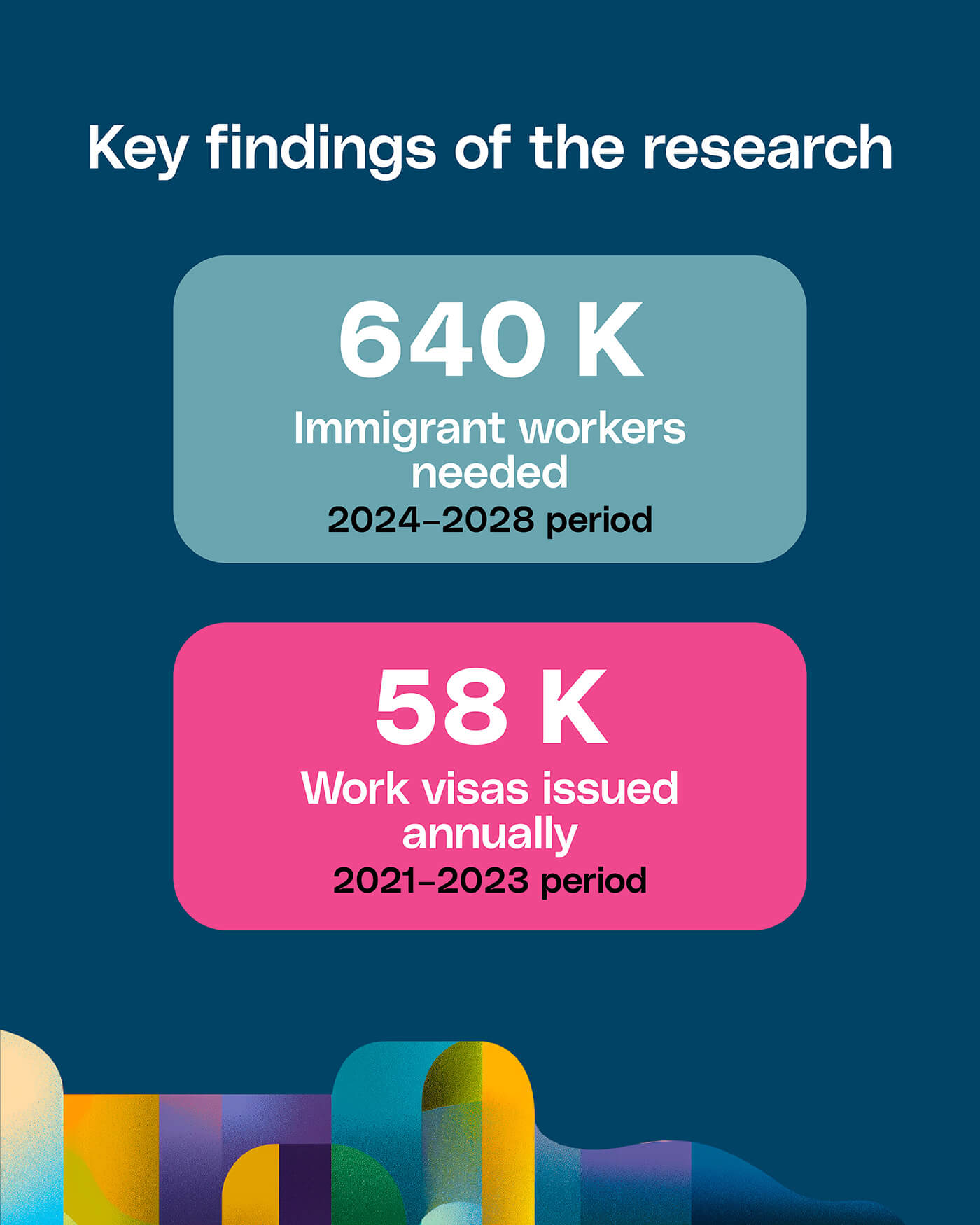
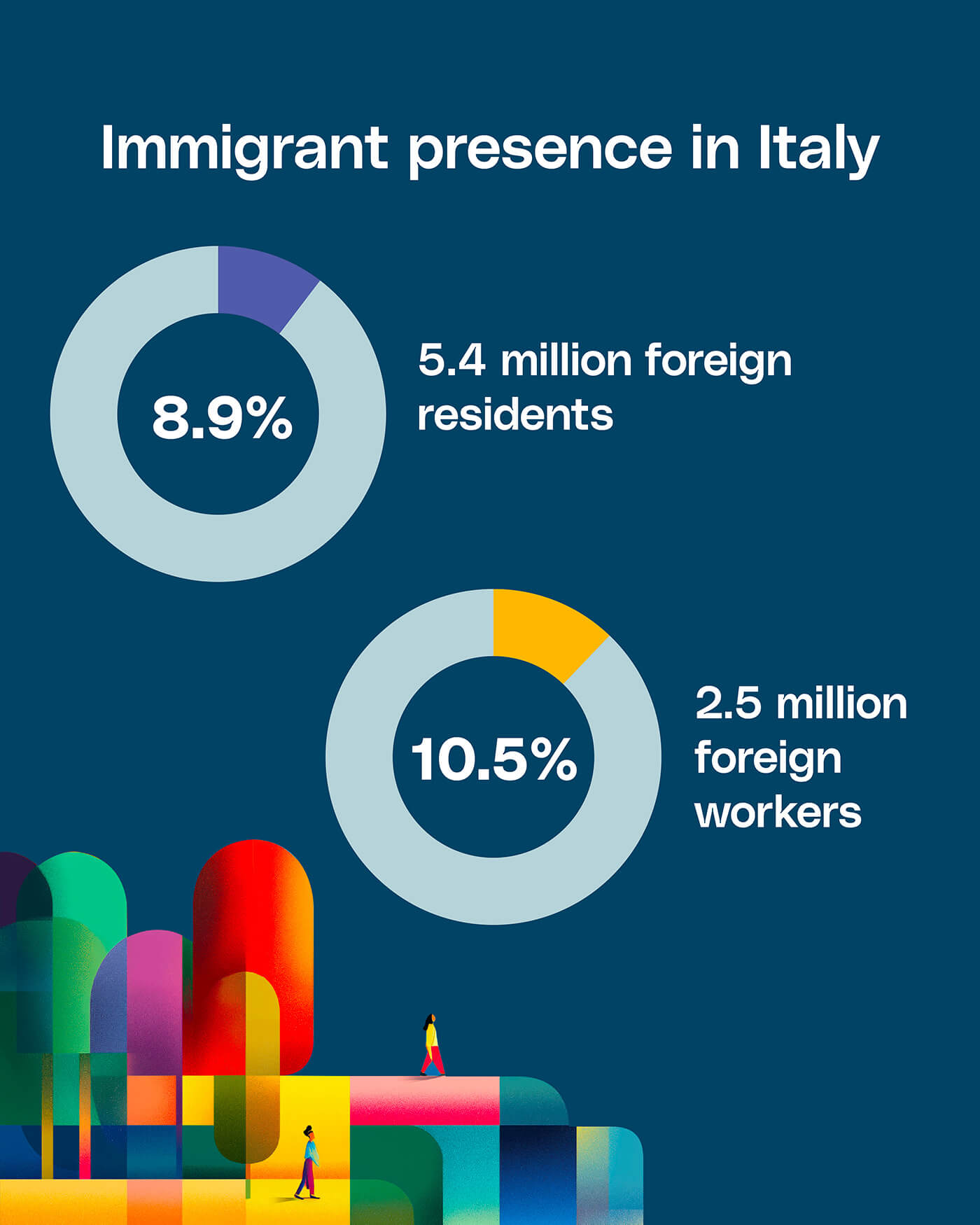
In this context, immigration has become increasingly significant over the last forty years and has gradually stabilized since the 2000s, mitigating demographic imbalances and contributing to the transformation of the country into an increasingly multi-ethnic society. As of January 1, 2025, there were 5.4 million foreigners legally residing in Italy, accounting for 8.9% of the total population[10]. As a result of the progressive integration of immigrants into the country, in recent years there has been a substantial increase in the number of residence permits related to family reunification (more than 100,000 applications approved each year since 2011) and a sharp increase in the number of people acquiring citizenship (684,000 new Italian citizens registered between 2020 and 2025) (Istat). Moreover, over the last ten years, a significant increase in the arrival of people seeking international protection has followed the global growth of climate and geopolitical crises. The 2.5 million foreign workers residing in Italy, constituting about the 10.5% of the regular workforce, constitute an integral part of the productive system, a vital resource not only supporting the labor supply and the welfare system, but also providing human capital, being a source of diversity and innovation. The so-called “immigration GDP”, or the economic contribution of foreigners to national wealth, is estimated to be €164.2 billion per year, equal to 8.8% of the national GDP (Fondazione Leone Moressa, 2024). The economic sectors where the presence of foreign workers is very high are agriculture, construction, manufacturing, domestic and personal care services, catering and tourism, logistics, and transport. The fundamental role of immigration in the country's production system is well known, especially in high-manual and lower-paid employment sectors. The Ministry of Labor and Social Policy (2025) estimates a need for approximately 640,000 immigrant workers for the period 2024-2028. Yet, admissions for work purposes, regulated annually by the Flows’ Decree, have steadily declined over the years (from approximately 140,000 permits issued in 2011 to just under 40,000 issued in 2023 [11]). This data is accompanied by the limited success of EU and national instruments to encourage skilled migration flows, such as the EU Blue Card[12] program12 or the national Skilled Immigration Act (Germany) and Invest your Talent in Italy programs, established with the aim of attracting “talent” from non-EU countries.
A vast body of scientific literature examines the job placement of foreigners in the labor markets of destination countries.
However, studies on how the foreign workforce can assist the green transition in various sectors are virtually non-existent. The research strategy was therefore extended to the broader topics of employment in the green economy sectors and the job placement of migrants in the Italian and international markets.
The research questions posed by this study are:
- What are the employment dynamics in the traditional and emerging sectors of the energy transition?
- What are the dynamics of the integration of foreign workers into the job markets of
destination countries, particularly in the Italian context and in the sectors involved in the energy transition?
Using an iterative procedure that follows predefined inclusion/exclusion criteria, publications were selected from the Web of Science archive to construct three distinct datasets (Table 1), which were then analyzed using both automated and qualitative techniques. This report briefly illustrates some of the results that emerged from the systematic literature review (SLR) of the two datasets EMP_ET and MIG_EMP.
Tabella 1 - Description of datesets and the different screening phases
Note: SLR: Systematic Literature Review (Aria & Cuccurullo, 2018); QCA: Qualitative Content Analysis (Kuckartz, 2019)
Systematic reviews of EMP_ET: employment in the energy transition sectors
Starting from the first dataset (EMP_ET), a systematic review of the literature exploring the link between employment and energy transition was applied, identified in this study from a collection of 2,571 scientific articles, mostly in English. Research on employment in green jobs has grown steadily in recent years, focusing on the workforce, the job market, skills, and efficiency. Events such as the Covid-19 pandemic in 2020 and the energy crisis triggered by international instability in 2022 have significantly accelerated interest in renewable energy, with 82% of the documents collected being published between 2020 and 2025. The countries most involved in scientific production on the subject are China (423 documents), the United States (388), England (320), Italy (219), and Germany (216). A cross-analysis of the most active journals, the relevant disciplinary fields, and the stated sustainability goals of the 2030 Agenda (SDGs)[14], reveals a lack of humanistic and social perspectives on the topic. In fact, 99% of publishers' research areas are related to energy and environmental sciences. In terms of research impact, researchers have framed their work within the pursuit of the SDGs “Climate Action”, “Affordable and Clean Energy”, and “Industry, Innovation, and Infrastructure”. On the other hand, goals with a more social matrix, such as those related to poverty reduction, full and productive employment and decent work, and the reduction of inequalities, are neglected. Demonstrating the importance of these issues, the three studies[15] with the highest number of citations[16], instead examine social justice and equity, the circular economy, public intervention, and the role of politics and finance in the implementation of energy transition projects.
An analysis of the keywords proposed by the authors of the studies allows us to outline some features of the production systems involved in the energy transition. The most studied sectors are those of off-grid renewable energy sources (RES), in particular solar, wind, hydroelectric, and marine energy. At the industrial level, energy-intensive sectors such as electric vehicle manufacturing and industries of raw materials related to renewable energy (cobalt, lithium, rare earth metals) are strategic. Vulnerable areas and islands are identified as key locations for the implementation of energy transition pathways, offering important natural resources and the opportunity to address environmental degradation and depopulation trends at the same time. From global agri-food value chains to local organic farms, the agricultural sector is heavily involved in the development of green technologies and is particularly significant in terms of employment dynamics. Strategies to mitigate rural decline are often associated with increased immigration. Several studies show how the role of migration is crucial in this area, especially in a direct way, due to the large prevalence of foreign workers in this sector, but also indirectly, due to the potential transfer of knowledge on traditional and innovative technologies for resilient and sustainable agriculture. A renewable energy market with growing economic and employment opportunities and a potential “multiplier effect” on local communities and businesses is what links the green transition to the digital transition. One example is the creation of advanced technologies for the energy systems of so-called “smart villages”. Another rapidly expanding sector is the ‘Web Economy’, where information and communication technologies (ICT), often concentrated in a few regions, are attempting alternative ways to reduce the consumption of huge amounts of energy to meet data processing and storage needs.
In general, although several studies highlight the potential creation of “millions of jobs”, the issue of employment is not treated as a driving force behind the transition, but rather as an indirect effect.
The sectors most oriented toward renewable energy and new sustainability strategies experience a shortage of skilled workers for the implementation, maintenance, and management of infrastructure. The most indemand professional profiles are civil engineers, network engineers, artificial intelligence engineers, and IT specialists, but also security personnel, maintenance technicians, and personnel employed in the economic activities that the green industry can generate in other productive sectors. These roles are identified as stable, require technical skills, and offer competitive salaries. Finally, a very small proportion of documents (just under 4%) explore the quality of work, labor rights and standards, health coverage, and welfare associated with the green economy.
Systematic review of MIG_EMP: the integration of foreigners into the job market
Since the 1990s, the integration of foreign workers into European job markets has attracted a growing number of cross-national case studies and analyses, highlighting various critical issues and forms of vulnerability of this component of the workforce. For this study, 2,077 documents published between 1992 and 2025 were analyzed through a systematic review, with an acceleration in scientific production recorded following the global economic crisis (2008-2011) and the humanitarian crisis on the southern shore of the Mediterranean (2015-2017). The countries with the highest scientific output are England (303 publications), the US (280), China (273), Germany (237), the Netherlands (127), and Italy (107). The disciplines most interested in the topic[17] are Economics (821 publications), Demography (398), Sociology (207), Ethnicity Studies (160), and Geography (157). For this collection, the most frequently mentioned SDGs are the “Reduction of inequalities”, the “Abolition of poverty”, and “Gender equality”.
Keyword analysis indicates that the success of migrants in the job market of their destination country partly reflects their skills, networks, human and social capital, adaptability, and resourcefulness. However, career trajectories are strongly influenced by the legal, institutional, and social context in which they operate. Full economic integration takes time, on average, between 5 and 10 years according to several studies. Both the legal status of entry and the (multiple) status changes that migrants experience over the course of their lives have important repercussions on the length of their stay in the host country and on their path to economic and social integration. Furthermore, several studies show that foreign workers are often confined to the lowest levels of the occupational hierarchy, to discriminatory practices of “ethnicization” of labor, and to a widespread underground economy. The objective fragility of the foreign workforce can be measured in terms of income (with almost 25% of foreign workers at risk of poverty in Italy), precariousness (with a prevalence of short-term and seasonal contracts), segregation (in occupational niches), under-employment, and fewer opportunities for professional upward mobility and access to skilled jobs. Regular migrants with medium-high levels of education, beyond the linguistic and cultural barriers they may encounter in the workplace, often face difficulties in the conversion of their educational backgrounds and qualifications obtained in their countries of origin, and in the recognition of their skills and the human capital they own. As a result, the job positions and salaries they can access are not in line with their background and expectations. In this context, as for native workers, the most vulnerable groups such as women and young people are at a greater disadvantage. In addition, poor awareness of protection mechanisms, inadequate housing conditions, and distance from the workplace are some of the factors that make foreign workers more vulnerable to exploitation and exclusion from the legitimate job market. The difficulty of access to the job market for asylum seekers is also well documented, linked to legal, occupational, and residential protection regime. Finally, migrants are the component of the workforce most exposed to market fluctuations, macroeconomic shocks, and global crises. Some examples are the employment crisis in the Gulf countries caused by the collapse of oil prices in 2014, the war between Russia and Ukraine and the resulting blockages of seasonal workers, the closure of borders in 2020 due to the Covid-19 pandemic, and the negative effects on mobility and employment sectors. Obstacles to participation in the formal economy are in turn associated with limited involvement in the community; unfamiliarity with democratic institutions, public decision-making processes, and one's rights as a citizen; a lack of social capital, trust, and sense of belonging; and less environmental and entrepreneurial engagement.
Conclusions
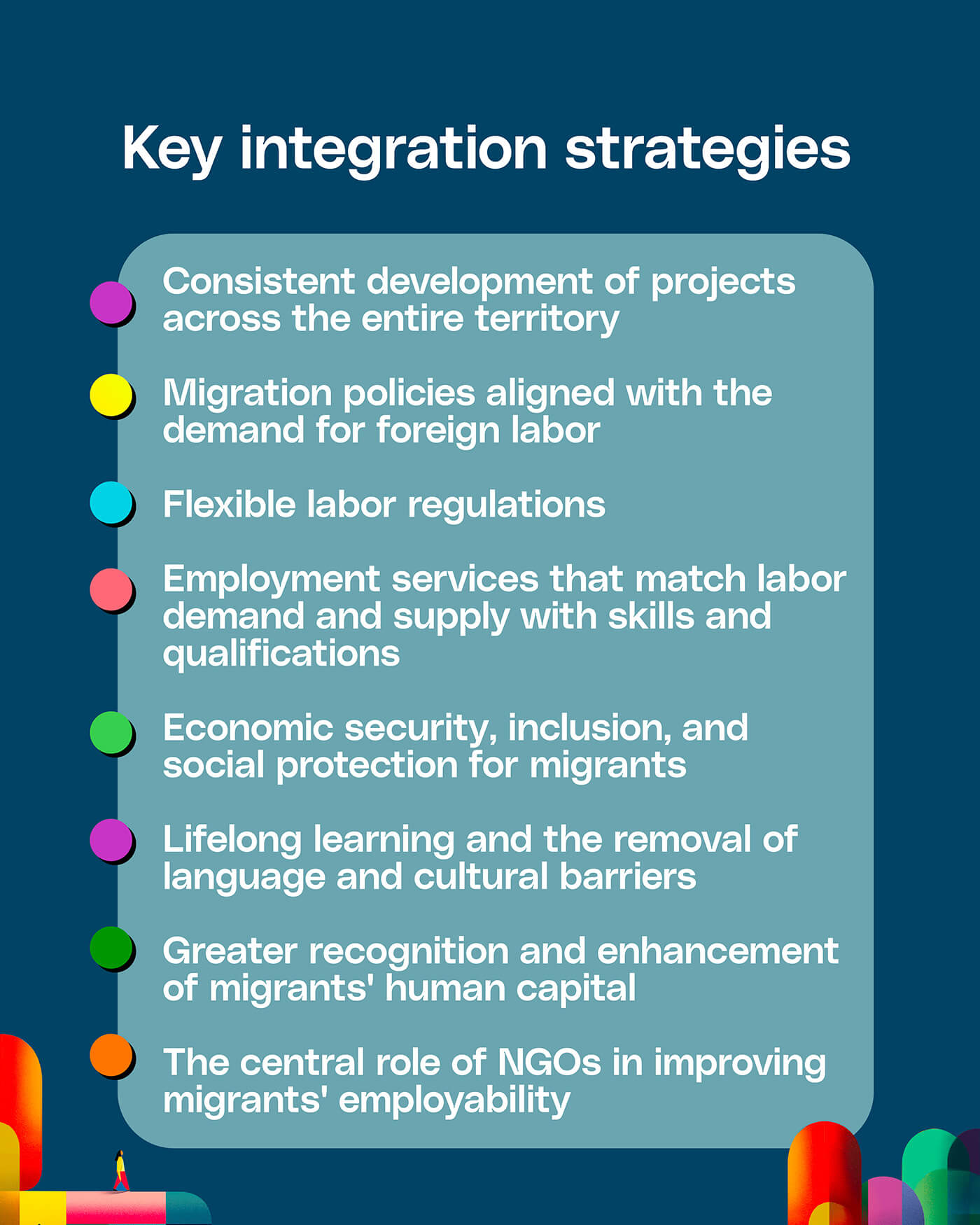
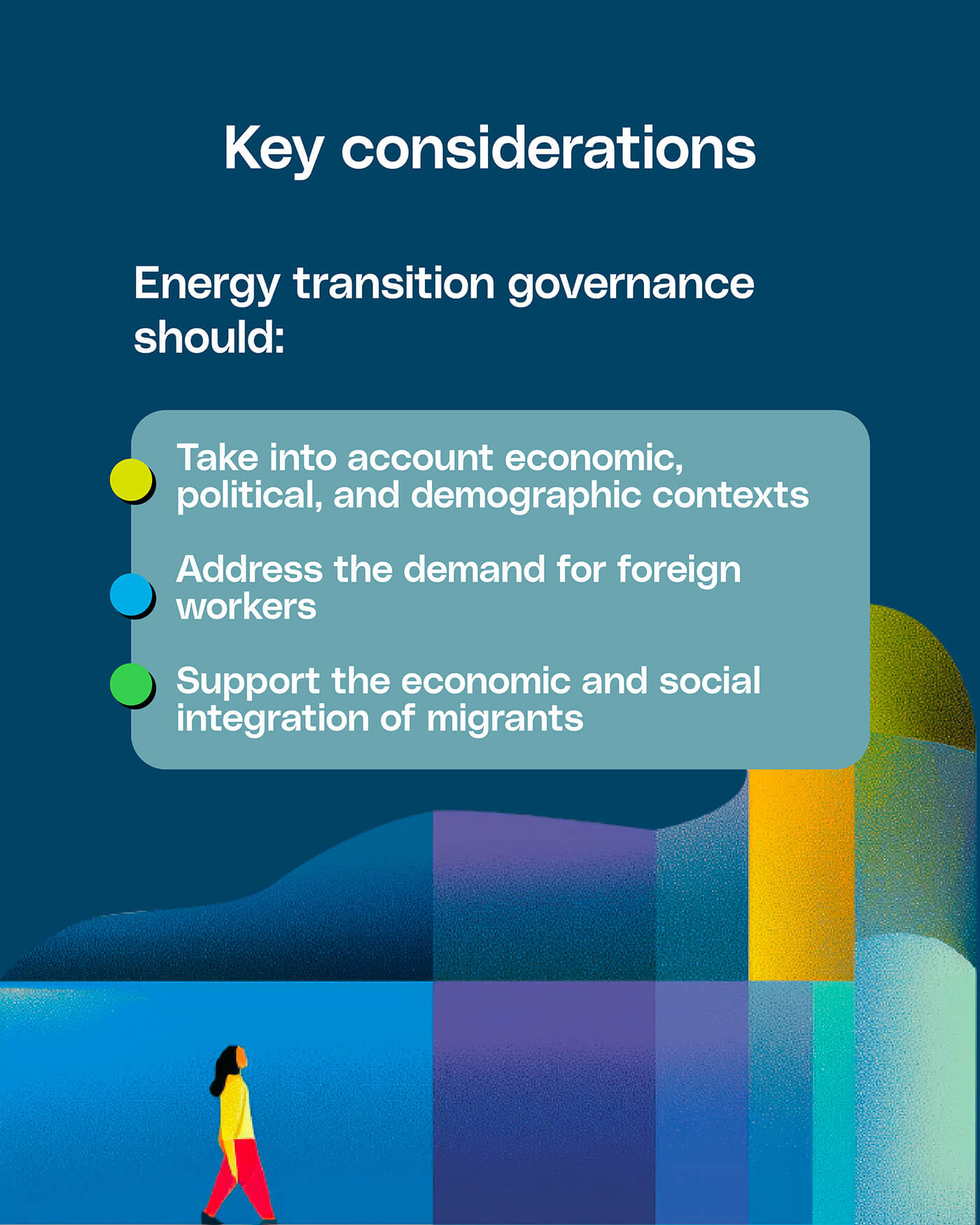
Research must provide tools for analyses that are essential for the definition of effective policies. This study is part of the broader debate on how socially inclusive and technically feasible solutions can promote just energy transitions, i.e., just, inclusive, and socially responsible. A first observation is that the dynamics of the green transition vary considerably depending on the context and are correlated with other economic, political, and demographic settings. It is therefore necessary to rethink the governance and regulatory strategies for the energy transition, outlining homogeneous development of projects across the territory that considers local specificities and guarantees flexible labor regulations as well as forms of mitigation and economic diversification. In addition to promoting public understanding of green energy and environmental protection measures, the public sector should regulate and articulate the country's energy transition path in a series of strategic points, for example by offering training and employment services aimed at orienting and aligning skills and qualifications in green jobs with labor supply and demand. The migration of foreign workers has long been a structural element of the Italian and European production system. Job placement in green sectors is part of the broader dynamics of economic and social integration of migrants. There seems to be a need to take a holistic view of the issue, capable of implementing solutions that can address the complexity of migration and economic processes. Migration policies should take greater account of the supply and demand for foreign workers, including in green sectors, and facilitate legal entry routes. Adequate and timely planning of labor migration flows must be followed with a guarantee of economic security, work inclusion, and social protection for migrants. Recruitment of a diverse workforce also requires ongoing training plans for the managerial class, corporate leadership, and the workforce itself, pathways to overcome language and cultural barriers, and greater consideration of the human capital of foreign workers. In this regard, the key role of civil society organizations as providers of essential services to the migrant population is widely recognized in the literature, offering various activities aimed at improving the employability of refugees and asylum seekers and helping them navigate migration and employment policies.
Biography
Cecilia Fortunato is a post-doctoral researcher in Demography at the Department of Methods and Models for Economics, Territory, and Finance at Sapienza University of Rome.
She holds a degree in Political Science and International Relations, specializing in Cooperation and Development, and a PhD in Demography from the School of Statistical Sciences at Sapienza. Her research interests center on international migration and the integration processes of migrant and diasporic communities. In particular, she focuses on voluntary and forced migration aspirations and behaviors, as well as emerging aspects of migration, such as return migration and the increasing flows of climate and environmental migration. She pays particular attention to the paths of integration, job placement, and economic and social inclusion of foreigners; to policies, narratives, and public debate on migration issues; to perceptions, subjective well-being, and the transfer of foreigners' cultural heritage to the contexts of their destination. In her studies, she adopts a multi-method and interdisciplinary approach, using quantitative and qualitative tools ranging from the text analysis of literature, media, and social media to the analysis of census or survey data and the use of ethnographic tools such as qualitative interviews and focus groups.